Tracing Regulatory Standards for Cumulative Prize Access and Player Protections in Digital Draw Systems
Harper Simmons · May 18, 2026

Tracing Regulatory Standards for Cumulative Prize Access and Player Protections in Digital Draw Systems
Digital draw systems have evolved into complex platforms where cumulative prize pools grow across multiple jurisdictions, and regulators focus on both access rules and safeguards that protect participants. These frameworks address how jackpots accumulate, who qualifies for entry, and what mechanisms prevent harm in online environments. Data from various oversight bodies shows consistent emphasis on transparency in prize calculations along with mandatory checks for age verification and spending limits.
Development of Standards Across Regions
Regulatory approaches began with basic licensing requirements in the early 2000s and expanded as digital platforms connected players across borders. In the United States, state-level gaming authorities established rules requiring clear disclosure of contribution rates to progressive pools, while Canadian provinces introduced centralized monitoring systems for draw integrity. Observers note that these early standards laid groundwork for later international alignment on player data security and prize fund segregation.
European directives further shaped cumulative prize access by mandating separate accounting for operator funds and player contributions, which reduced risks of commingling. Research indicates that such separations became standard practice after audits revealed vulnerabilities in less regulated markets. Those who study cross-border lotteries find that consistent reporting intervals, often monthly or quarterly, now allow authorities to track pool growth in real time.
Player Protection Protocols in Practice
Protections center on tools like deposit caps, session reminders, and self-exclusion registers that integrate directly with draw system software. Platforms must log every transaction tied to cumulative prize contributions, creating audit trails that regulators review during compliance checks. Studies from academic institutions reveal that these logs help identify patterns of excessive play before problems escalate.
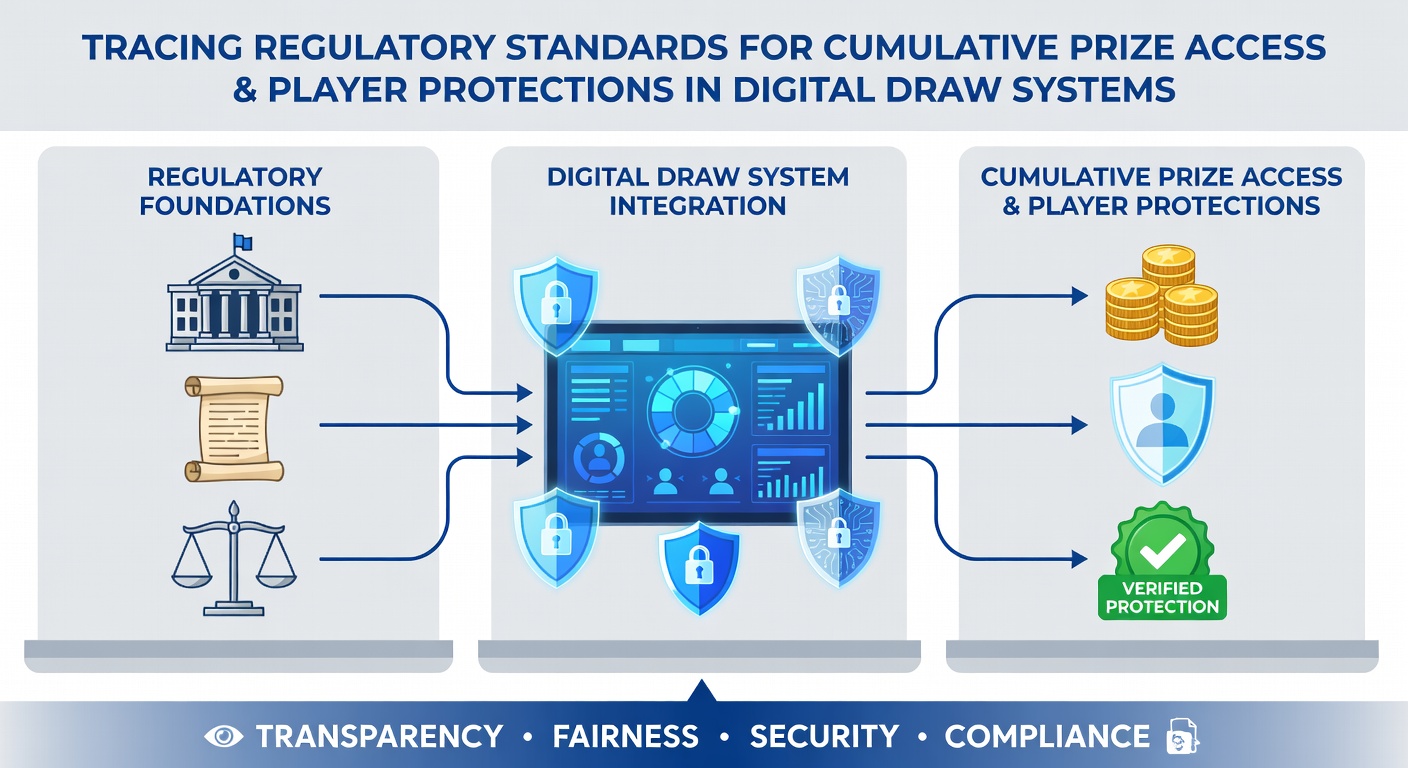
Operators in Australia implemented mandatory pre-commitment systems by 2025 that tie directly into progressive jackpot entries, ensuring participants set spending boundaries before accessing pooled prize draws. Similar requirements appear in several Canadian provinces where regulators require real-time alerts when users approach preset thresholds. The reality is that these features operate alongside identity verification processes that block underage accounts from any prize accumulation activities.
Compliance Updates Emerging in May 2026
By May 2026 several jurisdictions rolled out enhanced reporting standards for digital draw systems that handle cumulative prizes. These updates require operators to submit automated data feeds showing prize pool balances, contribution percentages, and player protection metric compliance. Government agencies in multiple regions coordinated on shared templates to reduce duplication for multi-jurisdictional operators.
Industry reports from gaming associations highlight how these changes improve oversight without disrupting gameplay flow. Experts have observed that the new protocols build on existing responsible gambling frameworks rather than replacing them, which allows smoother transitions for established platforms. Data shows increased audit frequency in the first half of 2026 compared with prior periods, particularly for systems where prize pools exceed defined thresholds.
Technical Requirements and Verification Processes
Digital draw systems must employ certified random number generators and cryptographic seals that regulators test at regular intervals. Cumulative prize access depends on verified player accounts that meet jurisdiction-specific residency and age criteria. Those who implement these systems often integrate third-party certification from independent laboratories to demonstrate ongoing compliance.
Linkages between prize pools and protection tools mean that any detected breach of spending limits automatically suspends further contributions to jackpots. Regulatory bodies in North America and Oceania emphasize this interconnection because it prevents escalation of risky behavior while preserving the integrity of pooled prize mechanics. Figures from recent compliance reviews confirm that such automated interventions occur thousands of times monthly across major platforms.
Conclusion
Regulatory standards for cumulative prize access and player protections continue to adapt as digital draw systems expand their reach. Coordinated efforts among government agencies, industry groups, and research institutions produce frameworks that balance operational flexibility with measurable safeguards. Ongoing monitoring through May 2026 and beyond will likely refine these rules further as technology and player behaviors evolve.