Participant Behavior Analytics and Progressive Prize Dynamics in Sanctioned Digital Gaming
Yara Coleman · Jun 22, 2026
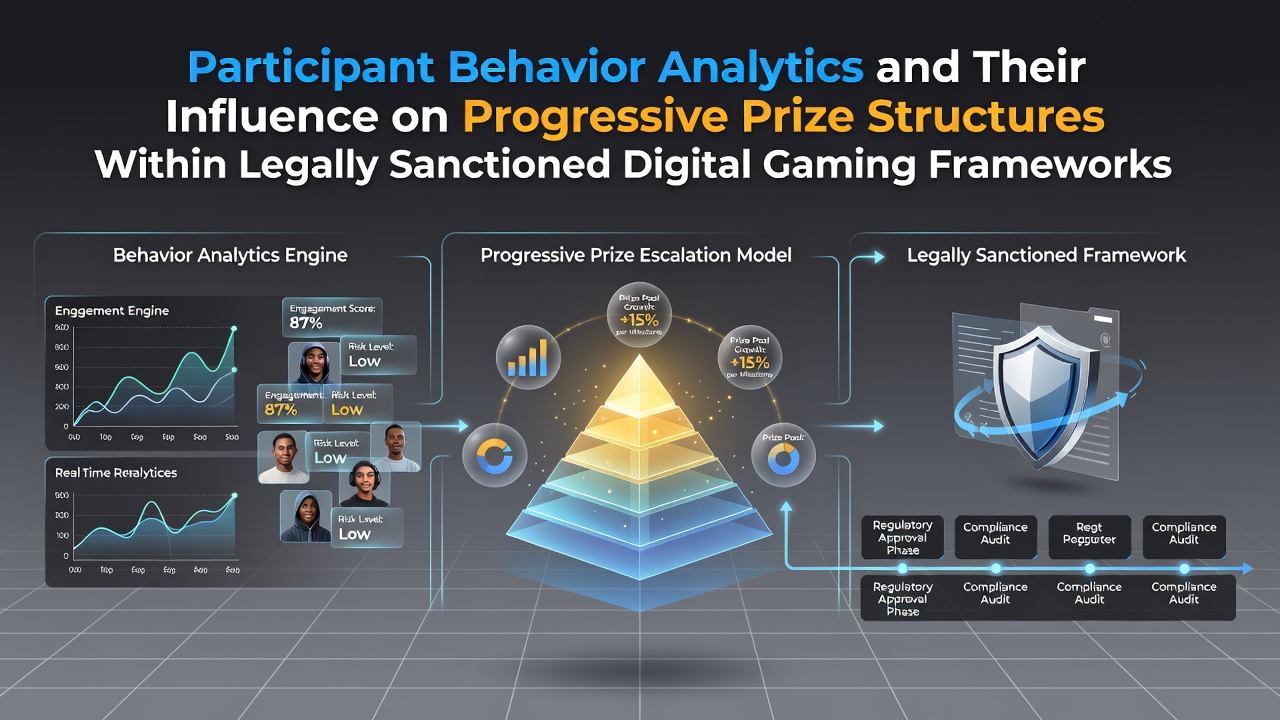
Participant Behavior Analytics and Progressive Prize Dynamics in Sanctioned Digital Gaming
Participant behavior analytics track how players interact with progressive prize pools in legally sanctioned digital gaming environments, and these systems adjust contribution rates plus payout triggers based on aggregated data from thousands of active accounts. Regulators require platforms to log participation frequency, bet sizing patterns, and session durations while ensuring all adjustments stay within approved mathematical models that prevent any single operator from altering outcomes unilaterally.
Data Collection Methods in Regulated Platforms
Operators collect anonymized metrics through secure APIs that feed into centralized compliance servers, and these servers cross-reference activity against licensing conditions set by bodies such as the Nevada Gaming Control Board. Session logs capture entry points into progressive games, withdrawal timing, and deposit intervals, which analysts then map against prize growth curves to identify when contribution percentages should shift to maintain pool sustainability.
Platforms in multiple jurisdictions integrate these analytics with mandatory responsible gaming flags, so when participation clusters around certain prize thresholds the system automatically applies cooling periods or contribution caps without manual intervention. Researchers at institutions studying digital chance operations have documented how such automated responses keep prize escalation aligned with actual player volume rather than projected estimates alone.
Influence on Prize Escalation Mechanisms
Progressive structures rely on a percentage of each wager feeding into shared pools, yet analytics now determine whether that percentage stays fixed or modulates according to real-time engagement density. When data shows sustained high-volume participation across multiple time zones, regulators permit operators to increase the contribution rate within pre-approved bands, which accelerates pool growth while documented safeguards prevent over-acceleration that could strain reserve requirements.
Conversely, when analytics detect declining participation in specific game variants, the framework allows temporary reduction of contributions to preserve player interest and avoid pool stagnation. This adjustment process occurs under continuous audit trails that licensing authorities review monthly, and figures released in June 2026 from several North American and European markets indicate that adaptive contribution models have extended average prize cycle lengths by measurable margins compared with static systems.

Regulatory Oversight and Compliance Integration
Legal frameworks in regions including Ontario and several Australian states mandate that any analytics-driven change to prize parameters receives pre-approval through documented simulation testing. Operators submit behavioral datasets to independent testing labs that verify the proposed adjustments will not alter the certified return-to-player percentages or create unintended concentration of prize access among narrow demographic segments.
Compliance officers examine correlation reports between participation spikes and prize trigger events, and they require operators to maintain minimum reserve ratios that analytics help calculate dynamically. When participation patterns shift because of seasonal events or new game releases, the same datasets inform whether prize reset values should increase to sustain long-term engagement without violating consumer protection statutes.
Case Examples from Operational Networks
One documented implementation in a multi-state digital lottery network used participation velocity data to recalibrate contribution tiers across linked progressive games, resulting in more even distribution of large payouts over quarterly periods. Another operator group operating under European licensing applied session-duration analytics to introduce tiered entry requirements that balanced smaller daily progressives with larger weekly accumulations, all while remaining within the mathematical models certified by their respective oversight bodies.
These examples illustrate how analytics serve as a feedback loop rather than a predictive tool, and they operate strictly within boundaries established by statute. Data from the Nevada Gaming Control Board and parallel reports issued by the Australian Gambling Research Centre continue to track these mechanisms across different regulatory environments.
Future Adjustments and Reporting Standards
Reporting standards now require quarterly disclosure of how behavioral analytics influenced any prize parameter changes, and these disclosures feed into public transparency portals maintained by licensing agencies. As digital frameworks expand into additional jurisdictions, the same core requirements persist: every modification must trace back to verifiable participation metrics, remain reversible under regulatory order, and preserve the certified fairness of the underlying random number generation.
Conclusion
Participant behavior analytics function as an embedded compliance instrument within progressive prize structures, allowing sanctioned operators to respond to actual engagement data while satisfying continuous oversight from multiple regulatory authorities. The mechanisms described rely on documented datasets, pre-approved algorithms, and periodic third-party verification rather than discretionary decisions, and this approach has become standard across legally operating digital gaming networks as of mid-2026.